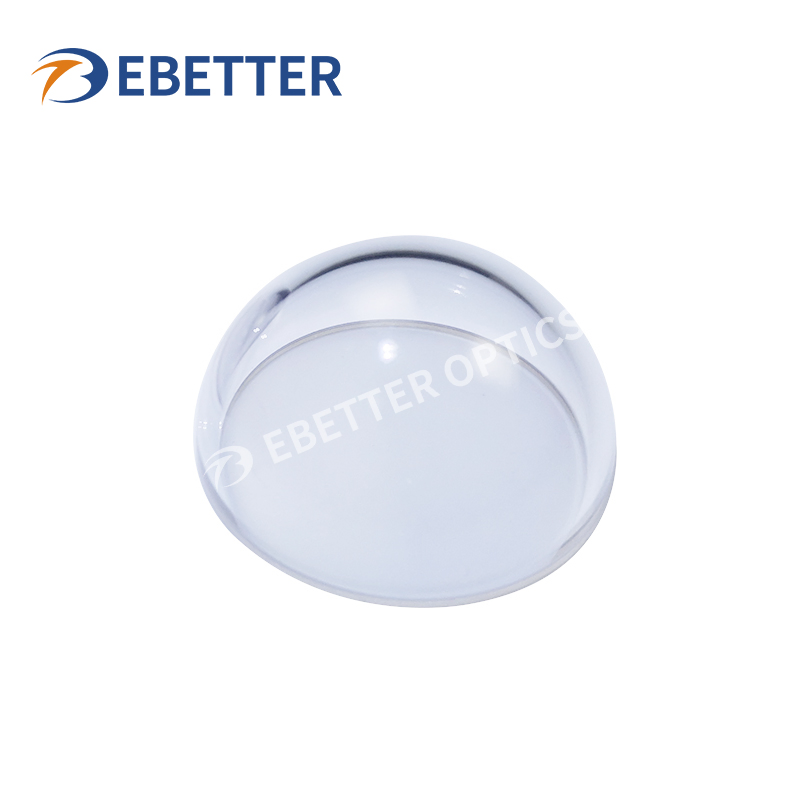
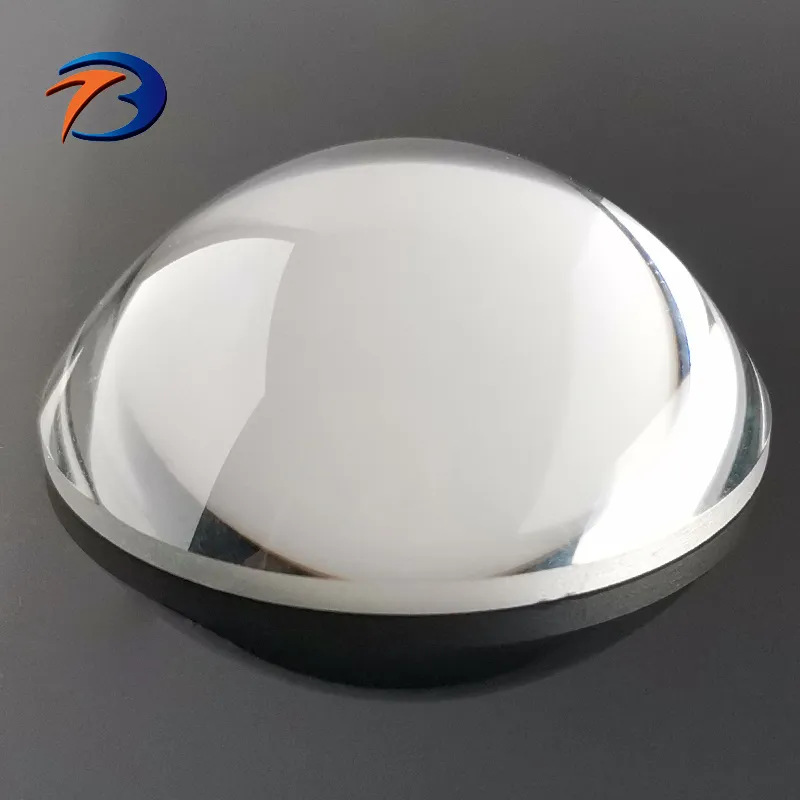
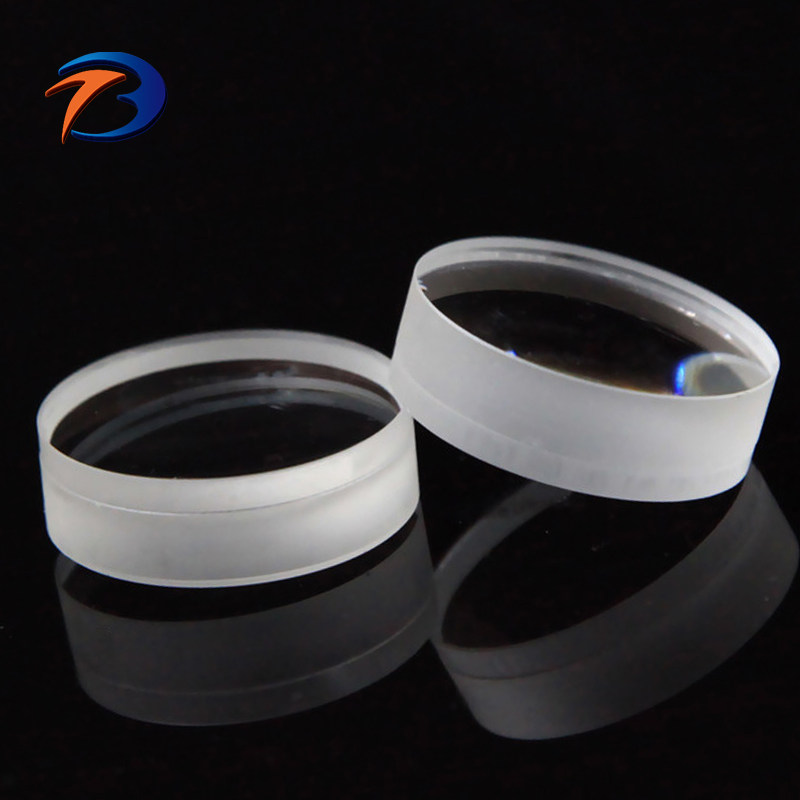
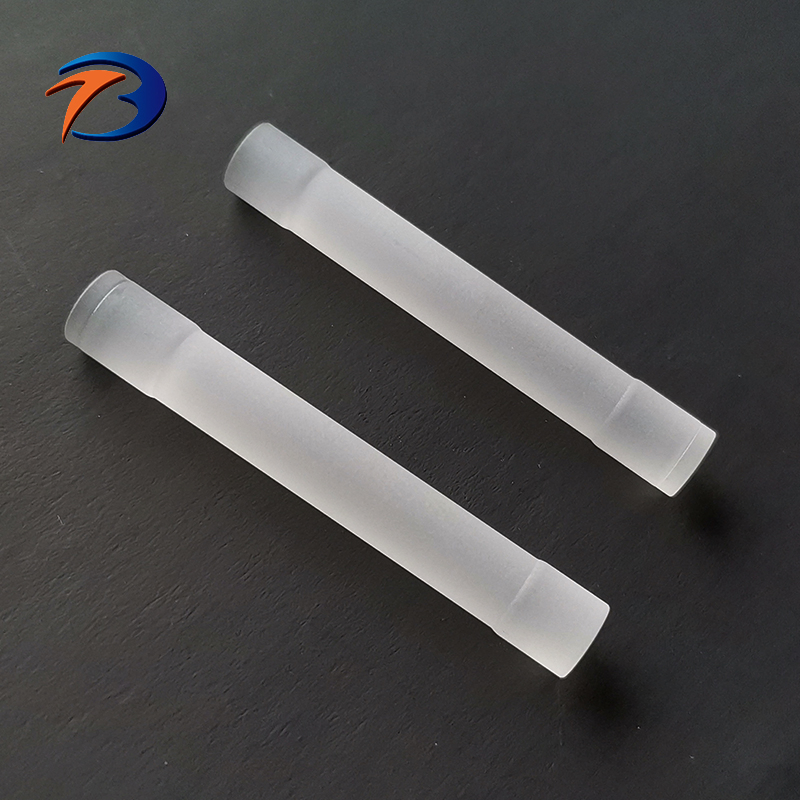
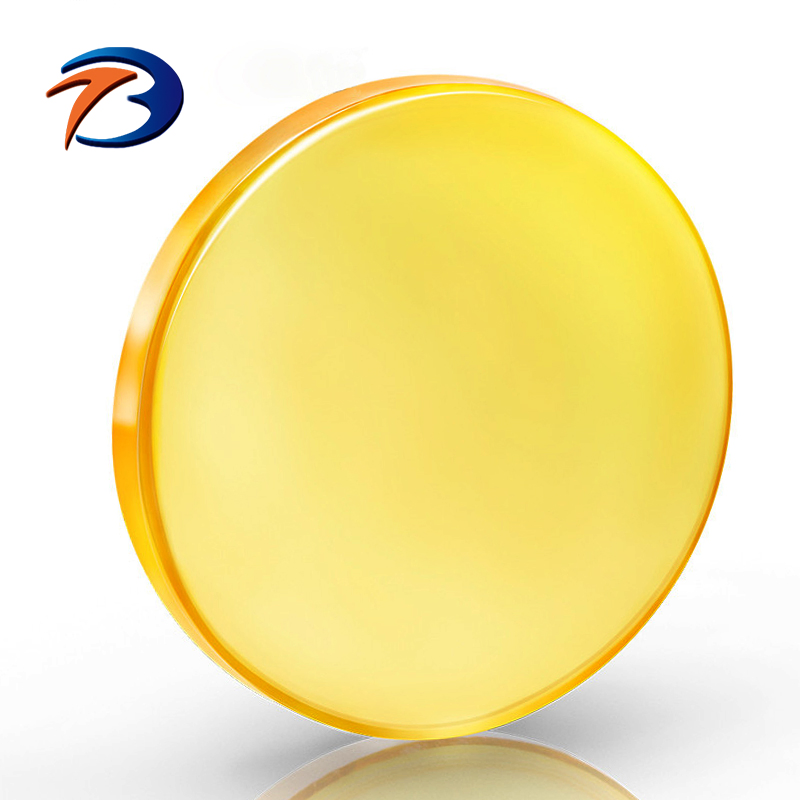
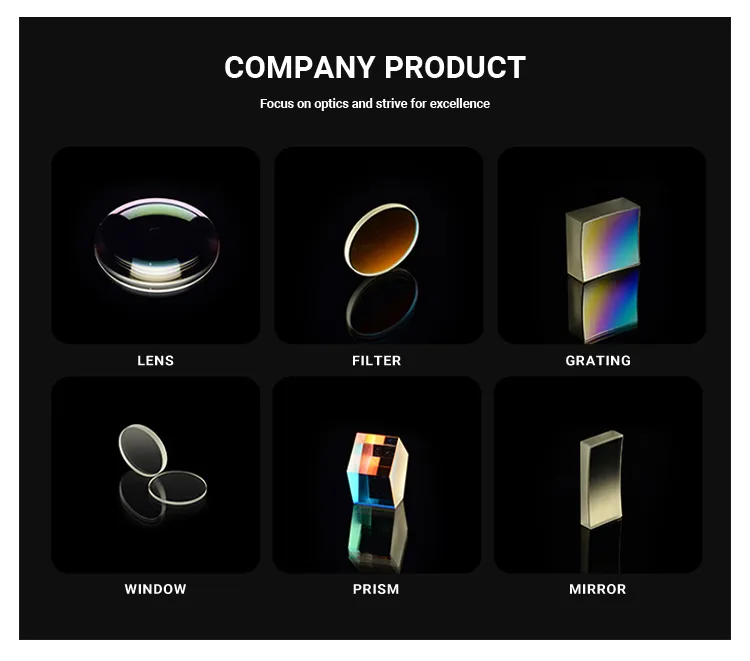
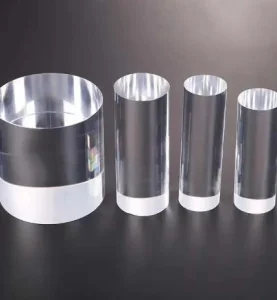
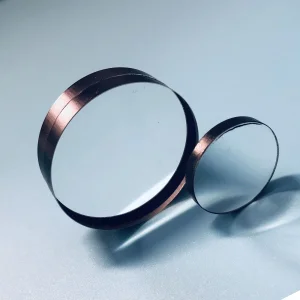
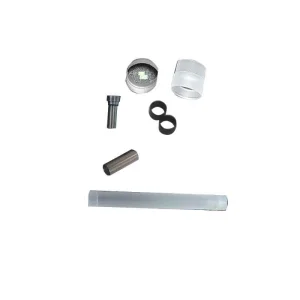
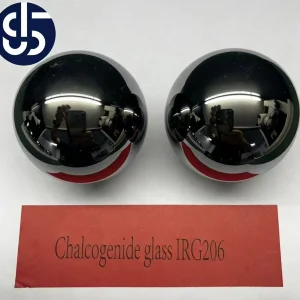
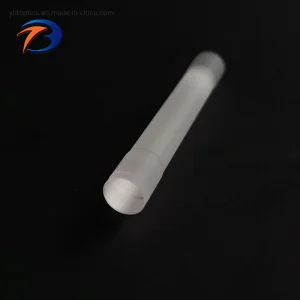
Optical Lenses are high-precision optical components designed to focus or diverge light, widely applied in fields ranging from microscopy to laser processing. A Plano-Convex or Double-Convex lens causes light to focus to a specific point, while a Plano-Concave or Double-Concave lens diverges light traveling through it. Achromatic Lenses are ideal for correcting color, and aspheric lenses are designed to correct spherical aberration. Ge, Si, or ZnSe lenses are specialized for transmitting the Infrared (IR) spectrum, while fused silica is perfectly suited for the Ultraviolet (UV) range.
Double-Convex Lenses
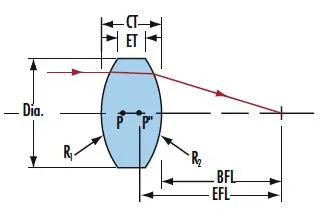
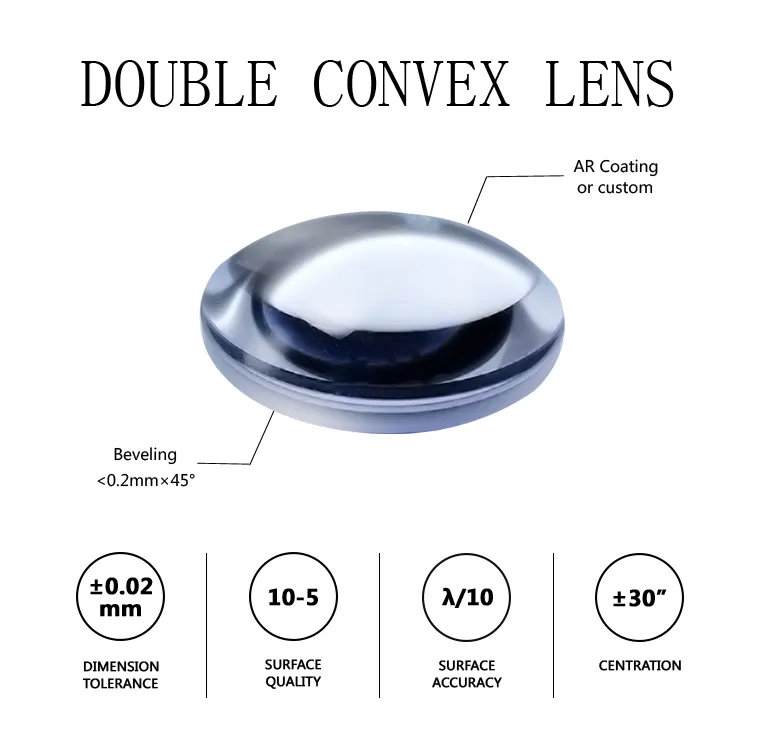
Double-Convex Lenses are essential in image relay applications or for imaging objects at close conjugates. These lenses feature positive focal lengths and two convex surfaces with equal radii. While aberrations may increase as conjugate ratios rise, DCX Lenses remain a versatile choice across numerous industrial and scientific applications.
Diameter Tolerance
+0.0/-0.1mm
Center Thickness Tolerance
±0.1 mm
Focal Length Tolerance
±1%
Surface Quality
60/40, 40/20 or better
Material
BK7, UV Fused silica, Ge, CaF2, ZnSe
Clear Aperture
>90%
Centering
<3 arc min
Coating
Customized options available
Bevel
Protective bevel as needed
Product Showcase
Frequently Asked Questions
What is the primary function of a Double-Convex lens?
Double-Convex lenses are used to focus light to a point. They are ideal for image relay applications and for imaging objects at close conjugates.
Which materials are best for Infrared (IR) applications?
For Infrared spectrum transmission, materials such as Germanium (Ge), Silicon (Si), or Zinc Selenide (ZnSe) are typically used.
What level of light transmittance can I expect?
Our optical lenses provide high efficiency with a transmittance rate of greater than 95%.
Do you offer customization for lens coatings?
Yes, we provide custom coating options to meet specific application requirements as part of our specialized manufacturing process.
What quality certifications do these lenses have?
All our optical lenses are manufactured to meet RoHS, ISO9001, and CE certification standards, ensuring high quality and reliability.
What is the standard surface quality of your lenses?
We offer surface quality grades of 60/40, 40/20, or even better, depending on the specific requirements of your project.
 TC MediGroup