Why is stainless steel used in surgical instruments? The answer begins with a demanding clinical environment. Instruments face repeated handling, bodily fluids, detergents, and high-temperature steam sterilization. A surgeon also expects a forceps tip to close accurately and a scalpel handle to remain stable.
When researching what materials are used in surgical instruments, stainless steel remains the central reference point. Its chromium content helps form a passive oxide layer, which resists corrosion during daily use. Its strength supports thin jaws, sharp edges, and dependable hinges. Its smooth, polished surface also makes cleaning easier. Under operating-room lights, this surface reveals scratches, stains, and manufacturing defects quickly.
Materials scientist Dr. Michael F. Ashby has explained, “Materials selection is a process of choosing the right material for the job.” That principle applies directly here. Stainless steel is not one universal solution. Martensitic grades can provide hardness for cutting instruments, while austenitic grades often support corrosion resistance and toughness. Titanium may reduce weight, and cobalt-chromium alloys may offer strong wear resistance. Polymers can appear in insulated handles or specialized components.
Still, stainless steel is not flawless. It can discolor, pit, or lose performance when cleaning practices fail. That detail matters. A durable instrument still depends on careful design, correct processing, inspection, and maintenance. The following discussion examines why stainless steel remains widely trusted, while also questioning when another material may serve the patient and surgical team better.
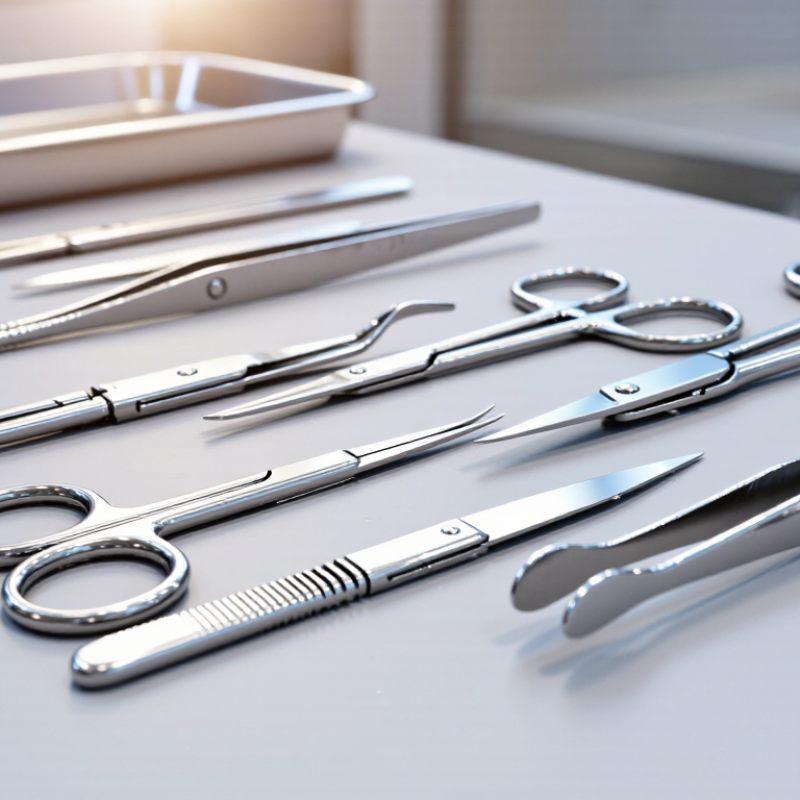
Stainless steel suits surgical instruments because it balances corrosion resistance, strength, hardness, and cleanability. These properties matter beside blood, saline, detergents, and repeated steam sterilization. ISO 7153-1:2016 identifies stainless steel as a common material for surgical instruments, while ASTM F899-23 covers stainless steel grades used in medical devices. Martensitic grades support sharp cutting edges and strong jaws. Austenitic grades, such as low-carbon corrosion-resistant steels, offer better resistance to staining and chemical attack.
The infection-control reason is practical. Smooth, well-finished steel leaves fewer places for soil to remain after cleaning. The World Health Organization reported that healthcare-associated infections affect about 7% of hospitalized patients in developed countries and 10% in developing countries. Material choice cannot prevent infection alone. Poor cleaning still defeats good steel. In real processing areas, instruments may show discoloration after incorrect detergent concentration, incomplete rinsing, or excessive exposure to chlorides. That is an uncomfortable limitation, but it deserves attention.
Tips: Check the instrument’s specified steel grade and follow the validated cleaning cycle. Dry hinged areas completely. Inspect joints, serrations, and cutting edges under bright light. Small rust spots are not always harmless; they may signal surface damage, contamination, or process failure. ASTM F899 and ISO 17664-1 can guide material and reprocessing decisions, but local validation remains essential.
| Performance Dimension | Typical Requirement for Surgical Instruments | Relevant Stainless Steel Characteristics | Why It Is Suitable | Important Considerations |
|---|---|---|---|---|
| Corrosion Resistance | The instrument must resist moisture, body fluids, cleaning chemicals, and repeated sterilization cycles. | Chromium content of at least approximately 10.5% enables the formation of a thin, self-repairing passive oxide layer. Common surgical grades such as 304 and 316L contain higher chromium levels; 316L typically contains approximately 16–18% chromium and 2–3% molybdenum. | The passive layer helps protect the surface from rust and staining during normal clinical use and reprocessing. | Chloride contamination, residual soil, scratches, and inadequate drying can still cause staining, pitting, or crevice corrosion. |
| Sterilization Resistance | The material must tolerate high heat, pressure, humidity, and repeated exposure to cleaning and disinfection processes. | Suitable stainless steel grades can withstand saturated-steam sterilization commonly performed at approximately 121–134°C when the instrument is properly designed and maintained. | Dimensional stability and corrosion resistance support repeated reuse without rapid material degradation. | Actual durability depends on the grade, surface finish, joint design, sterilizer cycle, water quality, and maintenance procedure. |
| Strength and Toughness | Scissors, clamps, forceps, and retractors must resist bending, impact, and repeated mechanical loading. | Austenitic grades such as 316L provide good toughness and ductility, while martensitic grades such as 420 can be heat-treated for higher hardness and edge retention. | Different stainless steel families allow manufacturers to match material properties to the instrument function. | A harder grade may offer better cutting performance but can be less corrosion-resistant or less tough than austenitic stainless steel. |
| Hardness and Edge Retention | Cutting instruments require a sharp, stable edge that remains functional through repeated use and reprocessing. | Heat-treatable martensitic stainless steels, including 420-type grades, can reach approximately 48–54 HRC depending on composition and heat treatment. | Controlled hardening improves wear resistance and helps cutting edges retain their shape. | Hardness values vary by specification and processing; excessive hardness may reduce toughness and increase the risk of chipping. |
| Biocompatibility | The material should not release harmful levels of substances during intended contact with tissue or bodily fluids. | Properly manufactured and passivated surgical stainless steel generally has a stable surface and a long history of use in medical devices. | The stable passive surface helps limit metal release under normal conditions. | Biocompatibility depends on the complete device, surface condition, alloy composition, residues, and intended duration of contact. |
| Cleanability | Surfaces should allow blood, tissue, and cleaning residues to be removed effectively. | Polished stainless steel can provide a smooth, non-porous surface with relatively low liquid absorption. | Smooth surfaces reduce places where contaminants can remain and make visual inspection easier. | Hinges, serrations, box locks, and narrow gaps require thorough cleaning because geometry can affect reprocessing effectiveness. |
| Manufacturing Versatility | The material must support forging, machining, grinding, polishing, joining, and heat treatment. | Stainless steel is available in a range of grades with different forming, machining, hardening, and welding characteristics. | Manufacturers can select a suitable grade and process for delicate forceps, durable retractors, or sharp cutting tools. | Poor heat treatment, welding, or polishing can reduce corrosion resistance and compromise performance. |
| Dimensional Stability | Jaws, tips, blades, and locking mechanisms must maintain alignment and function over repeated cycles. | Stainless steel has relatively low thermal expansion compared with many polymers and maintains useful strength across normal sterilization temperatures. | Stable dimensions support precise gripping, cutting, and positioning. | Repeated mechanical overload, improper handling, or excessive heat can still cause distortion or loss of alignment. |
| Service Life and Cost Efficiency | Hospitals need instruments that can be reused safely and economically when maintained correctly. | The combination of strength, corrosion resistance, repairability, and reusability supports long service life. | Long-lasting instruments can reduce replacement frequency and support consistent clinical performance. | Service life is not unlimited; inspection, lubrication of joints where appropriate, correct cleaning, drying, sterilization, and timely repair remain essential. |
Note: Values and performance ranges are typical industry references and may vary according to the stainless steel grade, heat treatment, surface finish, instrument design, and reprocessing conditions.
It balances corrosion resistance, strength, hardness, and cleanability.
Strong steel resists bending during firm clamping or tissue retraction.
No.
Smooth, well-finished steel leaves fewer places for soil to remain.
Yes.
Check joints, serrations, box locks, and cutting edges under bright light.
No.
Durability depends on alloy choice, surface finish, handling, cleaning, and sterilization.
Follow the validated cleaning and sterilization cycle.
Stainless steel remains a leading material for surgical instruments because it combines strength, corrosion resistance, hardness, and ease of maintenance. These properties allow instruments to withstand repeated handling, precise procedures, cleaning, and high-temperature sterilization without losing their shape or performance. Its smooth, nonporous surface also helps reduce the retention of contaminants, supporting safe and effective clinical use. When considering what materials are used in surgical instruments, stainless steel is often selected because it offers a practical balance between durability, reliability, and manufacturing flexibility.
Different stainless steel grades can be chosen according to an instrument’s function, with variations in hardness, toughness, and resistance to chemical exposure. However, stainless steel is not perfect; it may experience wear, staining, or damage under extreme conditions, and some users may have sensitivities to specific alloy elements. Future developments may focus on improved surface treatments, stronger alloys, lighter designs, and alternative materials that enhance performance while maintaining safety, sterility, and long service life.

 TC MediGroup