Understanding what training is required for robotic surgery systems begins with recognizing that no single course creates surgical competence. Training usually combines system orientation, virtual simulation, dry-lab practice, wet-lab experience, and supervised operating-room cases. Surgeons must learn console controls, instrument handling, camera positioning, energy devices, and safe patient access. They also need to understand system alarms and emergency undocking procedures. Small details matter, such as recognizing resistance in the instruments or maintaining a clear view of bleeding tissue.
Experience should develop under qualified faculty and according to hospital credentialing policies. Many programs use case logs, skills assessments, proctoring, and periodic reviews before granting independent privileges. Training also extends beyond surgeons. Bedside assistants, nurses, anesthesiologists, and technical staff must rehearse docking, instrument exchanges, troubleshooting, and rapid conversion to open surgery. The operating room should feel coordinated, not improvised.
Standards vary. Device manufacturers, specialty colleges, hospitals, and national regulators may set different expectations. For that reason, readers should verify current requirements with their institution and the relevant professional authority. A certificate alone is not enough. Competence must be demonstrated repeatedly.
The pathway is not always elegant. Experienced surgeons may underestimate the learning curve, while new users may focus too heavily on technology. Safe practice requires humility, honest feedback, and careful case selection. This article examines the practical training stages, assessment methods, team responsibilities, and continuing education needed for responsible robotic surgery practice.
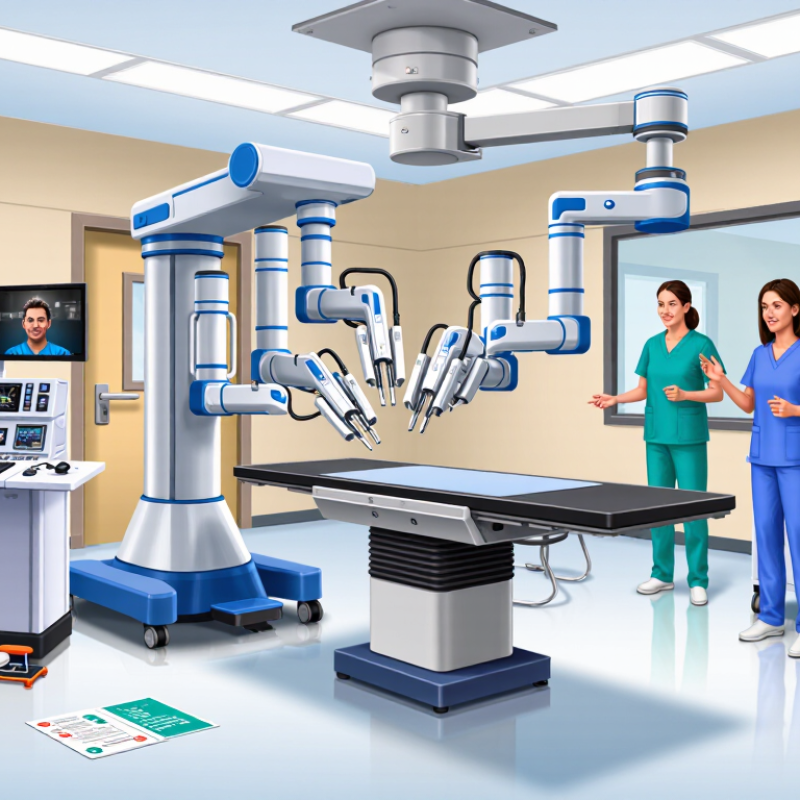
Robotic surgery systems commonly fall under FDA Class II medical device controls. This classification does not create one universal training syllabus. Instead, it supports risk-based oversight, special controls, performance testing, labeling, and post-market monitoring. Training must reflect the system’s cleared indications and operating instructions. A certificate alone is not enough.
Effective preparation begins with the official instructions for use, system alarms, emergency procedures, and setup checks. Learners should practice patient positioning, instrument loading, camera control, energy settings, and docking in a simulated environment. They also need supervised clinical experience, documented competency checks, and clear limits on independent use. Maintenance staff require separate instruction because technical servicing can affect device safety.
A strong program records who trained, which system version was used, and what skills were assessed. It should also address software updates, accessory changes, and reporting pathways for malfunctions or near misses. Institutional credentialing remains essential, even when external training is completed. In practice, teams may understand the controls yet hesitate during a sudden fault. That weakness deserves attention, not concealment. Refresher drills and realistic time pressure can reveal gaps that classroom teaching misses. I would also question programs that treat attendance as proof of readiness. Competence is demonstrated through repeatable performance, careful judgment, and safe response when the expected plan changes.
What Training Is Required for Robotic Surgery Systems?
A safe training pathway usually has four stages. Stage one begins with online modules covering system controls, patient selection, energy devices, emergency undocking, and operating-room safety. Short quizzes can confirm knowledge, but they cannot prove technical readiness. Stage two uses dry-lab practice, simulation consoles, and structured skills checks. The 2024 AORN Guidelines recommend documented competency validation for perioperative technologies, not attendance alone. Practice should include camera control, suturing, clutch use, and rapid instrument changes.
Stage three moves into supervised operating-room experience. Trainees observe complete procedures, then perform defined steps with direct guidance. Stage four involves proctored cases, where an experienced surgeon evaluates preparation, tissue handling, communication, troubleshooting, and emergency judgment. Progression should depend on evidence, not a fixed case count. The World Health Organization’s Global Patient Safety Action Plan reports that about one in ten patients experiences harm in healthcare, with more than half considered preventable. That finding makes supervision more than a formality. It is a patient-safety barrier. A checklist may look complete while confidence remains fragile.
Tips: Keep a case log with specific feedback. Record errors without blame. Reassess after long gaps. Use simulation before rare emergencies. Training plans should reflect local procedures, staffing, and credentialing rules. Even experienced surgeons may need retraining when interfaces or instruments change.
| Stage | Primary Objective | Training Activities | Typical Time | Competencies Developed | Completion Evidence | Progression Criteria |
|---|---|---|---|---|---|---|
| Stage 1 Online Foundation |
Build foundational knowledge before hands-on practice or clinical use. |
• E-learning modules • System components and operating principles • Patient selection and informed consent • Operating-room setup and workflow • Instrument handling, docking principles, and emergency undocking • Sterile technique and troubleshooting |
4–8 hours | Understand system functions, procedural workflow, safety checks, limitations, communication protocols, and basic fault-response procedures. | Module completion record and a knowledge assessment, commonly requiring a passing score set by the training institution. | All assigned modules completed; knowledge assessment passed; required prerequisites and credentialing verified. |
| Stage 2 Simulation Skills |
Develop basic technical control and coordination in a controlled, non-patient environment. |
• Simulator exercises • Camera control and instrument manipulation • Depth perception and clutching • Energy-device safety • Suturing, knot tying, dissection, and object transfer • Recognition and management of simulated system faults |
1–3 days | Demonstrate precise instrument control, efficient camera movement, safe use of energy devices, appropriate tissue handling, and effective team communication. | Simulation log, instructor feedback, and documented completion of assigned exercises or skills checklist. | Required exercises completed safely and consistently; no critical safety errors; instructor confirms readiness for supervised clinical observation. |
| Stage 3 Clinical Observation and Assistance |
Translate technical knowledge into real operating-room practice under direct supervision. |
• Observe experienced robotic procedures • Participate in operating-room briefings and time-outs • Review patient positioning and port placement • Assist with docking, instrument exchange, and undocking • Practice console-side communication and emergency workflows |
3–5 cases | Apply the complete workflow, maintain situational awareness, communicate clearly with the bedside team, and recognize patient, equipment, and procedural risks. | Case log, supervised skills checklist, faculty assessment, and documented participation in safety and emergency procedures. | Consistent adherence to institutional protocols; appropriate communication; satisfactory performance in setup, workflow, and safety-critical tasks. |
| Stage 4 Proctored Clinical Cases |
Demonstrate safe, independent clinical performance with an experienced proctor available for guidance. |
• Perform selected procedures under proctor supervision • Complete preoperative planning and team briefing • Lead console-based operative tasks appropriate to experience • Manage routine workflow variations • Demonstrate response to bleeding, equipment problems, and conversion considerations |
5–10 cases* | Integrate clinical judgment, technical execution, efficiency, patient safety, team leadership, and appropriate escalation of concerns. | Proctor evaluation, operative case log, complication and outcome review, and institutional privileging or competency documentation. | Proctor confirms safe independent practice within the approved procedure scope; hospital credentialing and privileging requirements completed. |
Robotic surgery training should begin in a simulation lab before supervised clinical cases. A useful program measures more than task completion. It records time, errors, and instrument economy during repeated exercises. These results create a practical baseline for coaching.
A benchmark may ask trainees to grasp tissue, place a suture, and release it without excess force. The simulator logs path length, unnecessary clutching, collisions, dropped instruments, and camera adjustments. Time matters, but speed alone can reward rushed movements. Error counts need clinical context. A brief pause differs from repeated tissue contact.
Instructors should review each replay with the trainee, not merely display a score. They can ask why the hand crossed the working field or why the camera drifted. Instrument economy appears through clean, deliberate motion. Fewer movements may reduce fatigue, yet rigid targets can discourage safe correction. Judgment still matters.
Training should continue until performance remains stable across several sessions. One excellent attempt proves little. Reliable benchmarks use identical task settings, trained assessors, and documented thresholds. They should also respect case complexity and individual learning curves. Even experienced operators may lose efficiency after a long break. That result is uncomfortable, but useful. Simulation can expose habits that a completion certificate hides.
What Training Is Required for Robotic Surgery Systems?
Credentialing evidence often begins with supervised experience. Institutional policies commonly require 10–30 supervised robotic cases before independent practice. Surveys published in the Journal of Robotic Surgery describe this range across hospitals and specialties. The exact threshold depends on procedure complexity, surgeon experience, and available proctors. A straightforward pelvic case does not equal a complex revision case. That distinction matters.
Training should document more than completed procedures. Hospitals may review console time, docking performance, instrument control, emergency undocking, and complication management. The American College of Surgeons emphasizes competency-based assessment rather than case numbers alone. National registry research, including analyses using ACS NSQIP data, also shows that outcomes vary with patient risk and procedure type. Case counts are useful evidence, but they remain an imperfect shortcut. I would not treat 10 cases as proof of readiness.
Tips: Ask for the hospital’s written threshold before training begins. Keep a case log with procedure type, supervision level, complications, and feedback. Request simulation practice for bleeding, loss of visualization, and urgent conversion. A short debrief after every case can reveal problems that numbers hide. Credentialing committees should reassess performance periodically, especially after long gaps in robotic practice.
Institutional credentialing policies commonly set supervised-case thresholds within a range of approximately 10–30 cases. Lower thresholds may apply to foundational privileges, while higher thresholds are generally used for more complex procedures or broader independent-practice privileges. These figures are illustrative of reported institutional thresholds and are not a universal regulatory standard.
Training for robotic surgery systems does not end after classroom instruction or simulator practice. Surgeons usually need structured lessons, supervised cases, and a documented assessment of technical and clinical performance. The exact pathway should match the procedure, team role, and hospital credentialing policy. Console time matters, but it is not the whole picture.
Maintaining competence requires an annual review. This review can examine operative videos, complication records, conversion rates, patient outcomes, and responses to unexpected events. An ongoing case-volume audit adds useful context. A surgeon who performs few robotic cases may need supervised practice or simulation before resuming complex procedures. Numbers alone can mislead. Case difficulty matters too. I have seen teams focus heavily on volume while overlooking communication failures during setup. That gap deserves honest discussion.
Tips: Keep a current training log. Record procedure type, role, supervision, and notable challenges. Review the log monthly, not only before renewal. Pair volume data with outcome trends and peer feedback. Use simulation after long breaks or difficult cases. Invite an independent reviewer when possible. Small errors should be discussed early. Not every concern indicates incompetence, but every pattern deserves attention. Annual review should feel rigorous, practical, and connected to safer patient care.
No. A certificate shows attendance, not reliable performance. Readiness requires simulation, supervised cases, competency checks, and institutional approval. Small details matter.
Training should cover setup checks, patient positioning, instrument loading, camera control, energy settings, docking, alarms, and emergency procedures. Practice should begin in simulation.
Programs should track time, errors, path length, unnecessary clutching, collisions, dropped instruments, and camera adjustments. Speed alone can reward unsafe rushing.
Many institutions require about 10–30 supervised cases. The exact number depends on procedure complexity, prior experience, supervision, and patient risk.
No. Case counts are only one piece of evidence. Review should include console control, docking, emergency undocking, complications, and post-case feedback.
Use identical task settings, trained assessors, documented thresholds, and repeated sessions. One excellent attempt proves little. Stable performance matters more.
It should record the learner, system version, assessed skills, supervision level, procedure type, complications, software updates, and feedback. Keep the record specific.
No. Maintenance staff need separate instruction because servicing can affect device safety. Clinical users need operational and emergency training instead.
They should rehearse alarms, loss of visualization, bleeding, emergency undocking, and urgent conversion. Realistic time pressure can reveal hidden gaps. Hesitation happens.
Reassessment is wise after long breaks, major software or accessory changes, repeated errors, or difficult cases. Attendance should not replace judgment. I would question any program that says otherwise.
What training is required for robotic surgery systems? A safe and effective pathway typically begins with regulatory awareness, system-specific instruction, and structured education on surgical controls, patient safety, and operating-room procedures. Trainees first complete online learning modules, then progress through hands-on equipment practice, simulated procedures, and supervised clinical cases. This staged approach helps confirm that they understand system functions before treating patients.
Simulation assessment should measure more than completion time. Programs can track technical errors, unnecessary instrument exchanges, movement efficiency, and the ability to manage common challenges. Credentialing committees may also require approximately 10–30 supervised cases, depending on institutional policy, specialty, and demonstrated competence. Training does not end after initial approval: clinicians should participate in annual reviews, maintain relevant case volumes, document outcomes, and complete additional education when performance or technology changes. Together, these requirements create a continuing framework for safe, consistent robotic surgery practice.

TC MediGroup