The 2026 discussion of robotic surgery systems is becoming more practical and demanding. Advanced platforms may combine articulated instruments, three-dimensional vision, data-assisted planning, and improved surgeon control. Yet an impressive console does not guarantee better patient care. The central question is what challenges exist in robotic surgery adoption across hospitals, surgical teams, and patients.
Operating rooms must accommodate large equipment, extra staff, and carefully planned workflows. A system can occupy valuable space beside the anesthesia machine and imaging equipment. Hospitals must evaluate capital costs, service contracts, disposable instruments, and procedure volume. These pressures become obvious when one delayed operation affects the entire schedule. Training is another test. A surgeon may master console controls quickly, while the wider team still needs repeated practice. Nurses and anesthesiologists must understand setup, positioning, troubleshooting, and emergency conversion. Early procedures can feel slower, and that learning curve deserves honest reporting.
Reliable evaluation requires more than manufacturer demonstrations. Clinical outcomes, complication rates, conversion rates, recovery time, and patient-reported results should guide purchasing decisions. Peer-reviewed studies and transparent registries can show where systems help and where benefits remain uncertain. Access also matters. Rural hospitals may lack specialist support, technical engineers, or sufficient procedure volume. Even advanced centers need backup plans for software faults, instrument failure, and service delays. This guide examines leading robotic surgery systems through an evidence-aware lens. It recognizes meaningful progress, but leaves room for doubt. Some conclusions will remain provisional. That is appropriate when technology changes faster than long-term evidence.
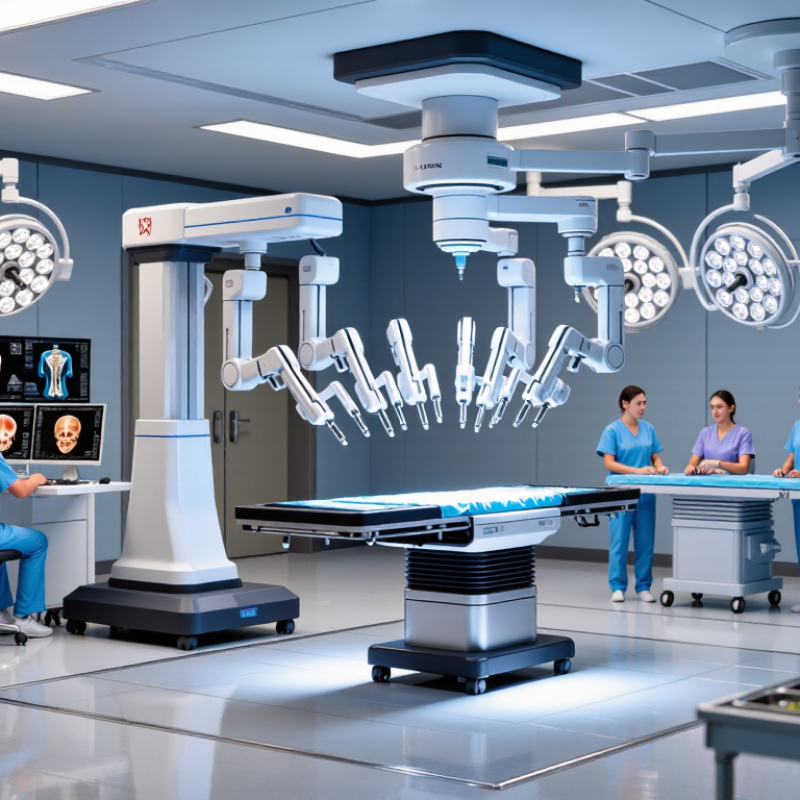
Robotic surgery systems in 2026 are computer-assisted platforms controlled by surgeons, not independent medical operators. They combine a high-definition camera, wristed instruments, robotic arms, and software that translates hand movements into precise actions.
In practice, a surgeon sits at a console while the patient-side system holds instruments above the operating table. Tremor filtering can steady delicate movements, and three-dimensional views can clarify narrow anatomical spaces. The World Health Organization’s Global Surgery 2030 analysis highlighted persistent gaps in safe, affordable surgical access. Robotic systems may improve control, but they do not solve shortages of trained staff, operating rooms, or postoperative care.
Market reports show strong commercial momentum. Grand View Research estimated the global surgical robotics market at more than 8 billion dollars in 2023, with double-digit annual growth expected through the decade. MarketsandMarkets also projected rapid expansion through 2028.
However, these forecasts often measure sales potential, not clinical value. Hospitals still face costly maintenance, complex training, limited instrument availability, and difficult integration with existing systems.
A report by the European Observatory on Health Systems and Policies also emphasizes that technology adoption requires evidence, governance, and workforce planning.
Modern robotic surgery systems translate a surgeon’s hand movements into precise instrument motion. The surgeon sits at a console and views a magnified, three-dimensional image. A narrow camera enters through a small incision. Wristed instruments then rotate inside the body, where human wrists have limited reach. Software filters tremor and scales movement. It does not operate independently.
The workflow depends on several linked layers. Optical sensors create the surgical image. Control software maps joystick movement to instrument motion. Mechanical arms maintain stable positioning around the patient. In some systems, vision software highlights anatomy or tracks tissue movement. However, tactile feedback remains limited. A surgeon may see tissue deformation without fully feeling its resistance. That gap matters during suturing or dissection.
Industry data shows rapid adoption. The International Federation of Robotics reported about 15,000 medical robots installed worldwide in 2023, a 23% annual increase. Market research from Grand View Research projects double-digit growth for surgical robotics through 2030. Yet installation numbers can hide practical weaknesses. A 2023 review in the Journal of Robotic Surgery linked outcomes to surgeon training, case selection, and team experience. The technology also requires careful calibration. A slight camera obstruction, delayed instrument response, or poor port placement can disrupt an otherwise controlled procedure. Costs remain substantial, and smaller hospitals may lack maintenance staff. Cybersecurity and patient-data governance need equal attention. The machine is advanced. The operating process is still imperfect.
The best robotic surgery systems are defined by clinical value, not impressive screens. They should provide stable three-dimensional imaging, precise instrument control, and useful tissue feedback. Haptic feedback remains an important goal, yet it is not equally mature across platforms. Surgeons still rely heavily on visual cues and experience.
Grand View Research estimated the global robotic surgery market at about USD 7.4 billion in 2023. Its report projects a 19.3% compound annual growth rate through 2030.
Growth alone proves little. The stronger systems improve operating-room workflow, reduce unnecessary instrument exchanges, and support consistent documentation. They should also connect safely with imaging, hospital records, and simulation platforms.
The World Health Organization and The Lancet Commission have reported that around five billion people lack access to safe, affordable surgical care. Therefore, affordability, repair access, and training matter as much as technical precision. This is often overlooked.
Tips: Evaluate the entire care pathway. Ask about setup time, surgeon learning curves, instrument costs, cybersecurity, service response, and evidence from peer-reviewed studies. Test the system with actual staff, not only trained representatives. A few minutes of smoother control may not justify a complex, expensive platform. That uncomfortable question deserves attention.
2026 Best Robotic Surgery Systems: What Clinical and Operational Challenges Exist?
Robotic surgery can improve instrument stability, visualization, and access through small incisions. Yet clinical performance depends heavily on team preparation. Surgeons must manage limited tactile feedback, unfamiliar hand movements, and possible instrument collisions. Docking errors can delay the procedure. They can also increase staff workload.
The WHO Global Patient Safety Report 2024 states that about one in ten patients experiences harm during healthcare, with more than half considered preventable. Robotic platforms do not remove this risk. They can introduce new failure points, including software interruptions, setup mistakes, communication gaps, and delayed conversion to open surgery. Training must therefore include emergencies, not only routine cases. No protocol is flawless.
Operational pressure is equally serious. OECD Health at a Glance 2023 reported that health spending averaged 9.2% of GDP across OECD countries in 2022. Hospitals must justify capital investment, maintenance contracts, disposable instruments, and longer training time. Operating-room turnover can suffer when teams lack standardized workflows. Credentialing also varies between institutions, creating inconsistent competency expectations. Data interoperability remains a practical weakness. Surgical video, device logs, and patient records may not connect cleanly. That limits auditing and meaningful quality improvement. The technology is impressive. The implementation is less tidy.
Hospitals should evaluate robotic surgery systems as clinical infrastructure, not impressive equipment. The first question is simple: which procedures need robotic assistance? Evidence should include complication rates, conversion-to-open rates, blood loss, operating time, and readmissions. A 2023 JAMA Surgery study found that robotic assistance reduced conversion to open surgery in some minimally invasive procedures, but results varied by procedure and surgeon experience. That variation matters.
Use a weighted scorecard. Give clinical outcomes the highest weight. Then assess instrument costs, service contracts, uptime, cybersecurity, and integration with imaging and hospital records. The 2024 AORN Guidelines stress structured training, credentialing, emergency conversion practice, and documented competency. Ask vendors for site-specific maintenance data, not broad claims. The FDA’s MAUDE database recorded thousands of robotic-device malfunction and injury reports in earlier surveillance analyses, although the database cannot establish causation or total risk. Hospitals should review those limitations carefully.
Run a three-year total-cost model. Include disposable instruments, staff training, operating-room redesign, and lost capacity during installation. Watch one real procedure from setup to cleaning. Small delays become expensive. Surgeon preference should not control the decision alone. Nurses, anesthesiologists, biomedical engineers, procurement officers, and patients should score the system independently. A polished demonstration can hide workflow friction. We should admit that published evidence often favors high-volume centers. Smaller hospitals may achieve different results. A staged pilot, transparent outcome reporting, and quarterly review can expose those gaps before a large capital commitment.
The figures show the global scale of surgical-care challenges that should inform robotic-system procurement. Hospitals should assess whether a system improves access, operating-room efficiency, clinical outcomes, workforce capability, interoperability, cybersecurity, maintenance support, and total cost of ownership.
Sources: The Lancet Commission on Global Surgery, 2015; Weiser et al., The Lancet, 2008. The figures are global estimates and are not company or brand performance data.
Stable three-dimensional imaging, precise instrument control, and useful tissue feedback are essential. Haptic feedback is promising, but its maturity varies. Surgeons still depend on vision and experience. Impressive screens are not enough.
Review complication rates, conversion-to-open rates, blood loss, operating time, and readmissions. Compare results by procedure and surgeon experience. One system may perform well in a high-volume center but differently elsewhere. That matters.
Build a three-year model. Include disposable instruments, training, room redesign, maintenance, service, and installation-related downtime. A short setup delay can affect several cases. Cheap at purchase? Maybe not.
Observe a real procedure from room setup through cleaning. Include nurses, anesthesiologists, engineers, and procurement staff. Measure docking time, instrument exchanges, documentation, and cleanup. A polished demonstration can hide friction.
Use structured training, formal credentialing, emergency conversion drills, and documented competency checks. Practice with the full team, not only the surgeon. Staff should know what happens when visualization or instruments fail. Drills expose awkward gaps.
The system should connect safely with imaging, medical records, and simulation tools. Review access controls, software updates, audit logs, and recovery plans. Ask who responds during an outage. Connectivity can create risk, too.
Request site-specific uptime, repair times, spare-part access, and service records. Do not rely only on broad performance claims. Ask how long a failed camera or instrument may interrupt surgery. Downtime is clinical, not merely financial.
Surgeon input is valuable, but it should not control the decision alone. Patients and the wider operating-room team should score the system independently. Use a weighted scorecard, with clinical outcomes carrying the greatest weight. We may still miss something.
In 2026, robotic surgery systems are advanced digital platforms that combine surgical instruments, high-definition visualization, motion control, software assistance, and data connectivity to support minimally invasive procedures. Modern systems translate a surgeon’s hand movements into precise instrument actions while filtering tremor, improving access to difficult anatomical areas, and providing enhanced visualization. The best robotic surgery systems are defined by accuracy, intuitive control, flexible instrument options, strong safety features, easy integration with hospital technology, and useful analytics that support training and performance improvement.
However, hospitals must carefully consider what challenges exist in robotic surgery adoption. Key concerns include high acquisition and maintenance costs, staff training requirements, operating-room workflow changes, limited procedure compatibility, equipment availability, cybersecurity, and the need to demonstrate measurable clinical and financial value. When selecting a system, hospitals should assess patient needs, surgeon expertise, service support, interoperability, total ownership costs, upgrade potential, and long-term operational impact. A balanced evaluation can help organizations choose technology that improves care without creating unnecessary complexity.

TC MediGroup